

But happiness is no respecter of persons.
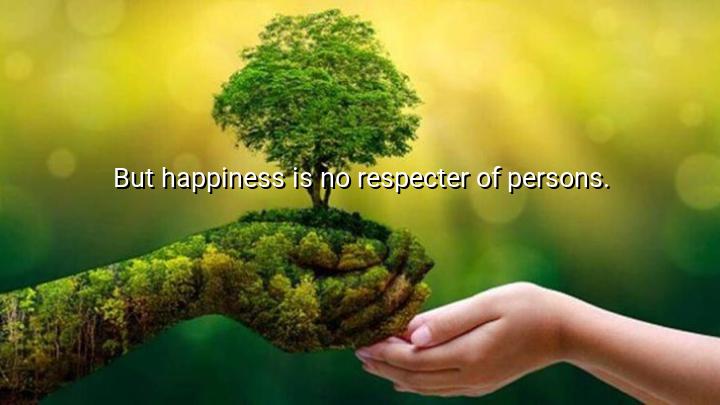




In this quote, Stephen Fry reflects on the idea that happiness is not determined by one’s status, wealth, or circumstances. He suggests that happiness does not discriminate—it is available to everyone, regardless of who they are or what they have. This notion challenges the idea that only certain people, often those with privilege or success, are entitled to happiness, emphasizing that contentment is accessible to all.
Fry’s statement also implies that happiness is a universal experience that transcends social or material differences. It suggests that inner peace and joy do not depend on external conditions, but rather on personal mindset, attitude, and how one engages with the world. The quote encourages the idea that, irrespective of one’s background or external achievements, true happiness comes from within, and everyone has the potential to experience it.
The origin of this quote stems from Fry’s general outlook on life, where he has often spoken about mental health, well-being, and the pursuit of joy. Known for his humor and philosophical reflections, Fry frequently explores the complexities of human emotion and the challenges of navigating life’s ups and downs. His words here reflect a broader belief that happiness is not reserved for the privileged few, but is an attainable goal for anyone willing to seek it.
Ultimately, Fry’s quote emphasizes the egalitarian nature of happiness, reminding us that it is not something that can be bought, earned, or restricted to specific people. It suggests that happiness is a universal right, one that is equally available to all who are open to experiencing it.

AAdministratorAdministrator
Welcome, honored guests. Please leave a comment, we will respond soon