

Budgets are moral documents. They reflect the values of any government and when you're compromising clean air, clean water, and lead, you're making a statement about communities you don't care about.
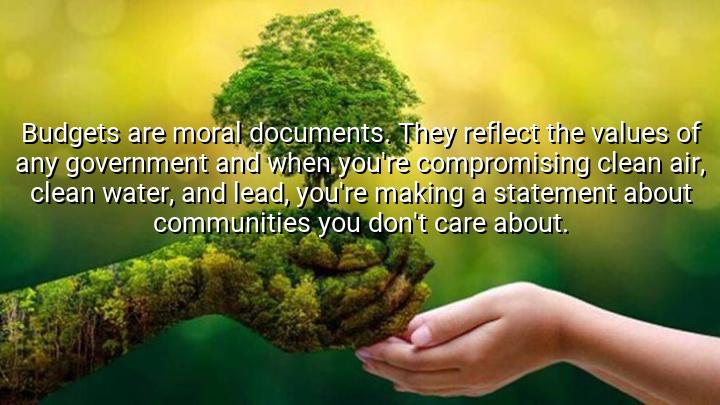




The quote by Tom Perez asserts that budgets are more than just financial plans—they are moral documents that reflect the values and priorities of a government. Perez argues that when a government allocates resources in ways that harm the environment or neglect the well-being of vulnerable communities, such as compromising clean air, clean water, or addressing lead contamination, it sends a message about the government’s priorities. Essentially, how money is spent reveals what a government truly cares about and who it is willing to help or harm.
Perez’s statement highlights the connection between economic decisions and ethical choices. By linking the allocation of funds to issues like environmental protection and public health, he points out that these financial decisions are not neutral—they reflect whether a government values the health and safety of its people, especially those in marginalized or disadvantaged communities. Neglecting these issues in the budget is, in his view, a clear moral failure, one that demonstrates disregard for certain segments of society.
The origin of this quote can be traced to Tom Perez’s work in politics, particularly his role as the former Secretary of Labor under President Obama and his involvement in social justice issues. Perez has long advocated for economic equity and environmental sustainability, often arguing that public policies should reflect a commitment to social justice and the common good. This quote speaks to his broader political philosophy of prioritizing the welfare of all citizens, especially the most vulnerable.
In essence, Perez’s quote underscores the idea that budgets are not just about numbers; they are an expression of a government’s values. How a government chooses to spend its money speaks volumes about its commitment to public health, environmental protection, and the welfare of its citizens, particularly those who are most in need.

AAdministratorAdministrator
Welcome, honored guests. Please leave a comment, we will respond soon