

Bombing, particularly from the perspective of the receiving end, is not 'communication.' Bombs result in death and destruction.
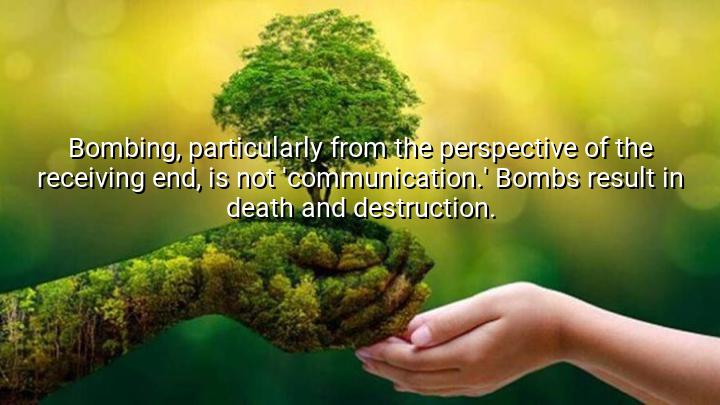




The quote by H. R. McMaster, a former U.S. Army general and National Security Advisor, critiques the use of bombing as a method of communication in warfare. McMaster underscores that, from the perspective of those on the receiving end, bombing does not facilitate dialogue or understanding. Instead, it leads to death and destruction, emphasizing the devastating effects of violence. This perspective challenges the idea that military force, particularly bombing, can serve as an effective means of resolving conflict or conveying a message.
McMaster’s statement highlights the disproportionate impact of bombing on civilians, who often bear the brunt of such attacks. While military strategies may use bombing to assert power or control, it ultimately results in loss of life and the collapse of infrastructure, leaving communities devastated. By pointing out that bombs cannot foster true communication, McMaster advocates for more peaceful and constructive ways of addressing conflicts, where negotiation and diplomacy take precedence over destruction.
The origin of this quote likely stems from McMaster’s deep experience in military affairs and his understanding of the limits of military force. As someone who served in several military operations, including the Gulf War and Iraq War, McMaster has seen firsthand the consequences of violent conflict. His perspective reflects his broader views on the necessity of carefully considering the humanitarian consequences of military actions and the importance of using force responsibly.
Overall, McMaster's quote serves as a reminder that while military actions like bombing may be employed to exert pressure or influence, they should never be mistaken for true communication. True communication, according to McMaster, requires understanding and dialogue, not violence.

AAdministratorAdministrator
Welcome, honored guests. Please leave a comment, we will respond soon