

Beware of false knowledge; it is more dangerous than ignorance.
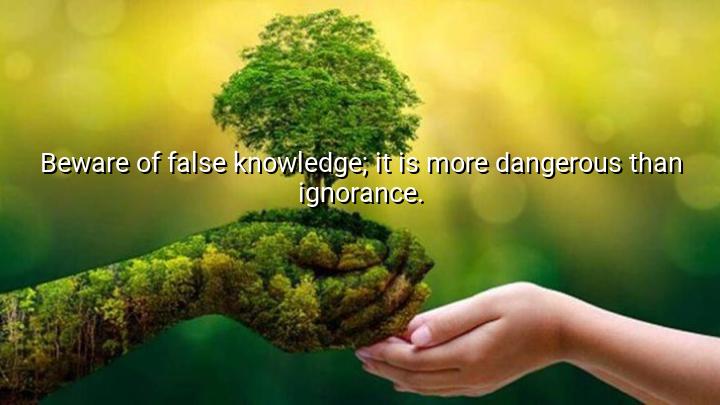




The quote, “Beware of false knowledge; it is more dangerous than ignorance,” is attributed to George Bernard Shaw, the Irish playwright, critic, and Nobel Prize winner. Shaw was known for his sharp wit and deep social commentary, often challenging conventional thinking. In this statement, he warns against the perils of false knowledge—misinformation, misconceptions, or half-truths—arguing that they are far more harmful than simple ignorance.
The first part, “beware of false knowledge,” highlights the importance of vigilance when it comes to what we accept as truth. Unlike ignorance, which is simply a lack of knowledge and can be corrected through education, false knowledge misleads people into believing they are informed when in fact they are misguided. This illusion of understanding prevents individuals from seeking the real truth.
The second part, “it is more dangerous than ignorance,” underscores the destructive consequences of misinformation. A person who is ignorant may be open to learning, but one who believes in false knowledge often acts with misplaced confidence, making poor decisions and spreading errors further. In society, this danger multiplies when misinformation influences politics, science, or public health.
Ultimately, Shaw’s insight reflects his broader skepticism of superficial thinking and unexamined assumptions. He urges us to pursue true knowledge critically, questioning sources and testing ideas rather than blindly accepting them. His words remain strikingly relevant today, reminding us that false knowledge can undermine progress far more effectively than ignorance alone.

AAdministratorAdministrator
Welcome, honored guests. Please leave a comment, we will respond soon