

Belfast is a city which, while not forgetting its past, is living comfortably with its present and looking forward to its future.
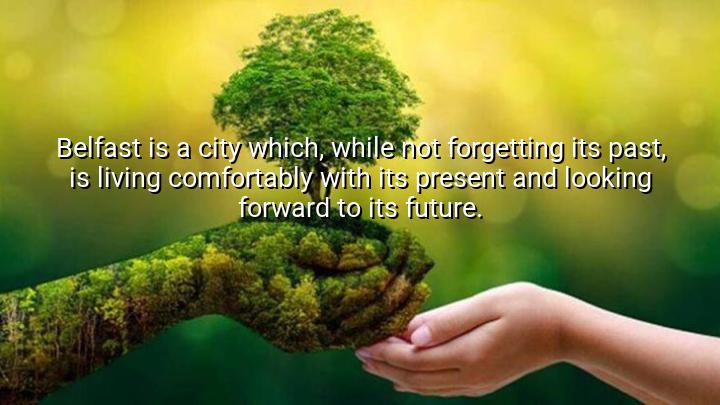




James Nesbitt's quote reflects the resilience and hope of the city of Belfast. It acknowledges the difficult history that the city has endured, particularly the period of sectarian conflict known as "The Troubles." Nesbitt emphasizes that, while Belfast does not ignore or erase its past, it is also focused on progress and building a positive future. The idea is that a city can grow and evolve without forgetting the lessons of history, using those lessons as a foundation for healing and reconciliation.
The origin of this sentiment comes from Nesbitt’s personal perspective as a native of Belfast, and his view of the city’s transformation over the years. He has witnessed the shift from a city deeply divided by political and religious tensions to one that is increasingly unified and forward-thinking. Nesbitt’s quote highlights Belfast’s journey of recovery and reconstruction, as it has moved away from the divisions of the past while embracing a new, inclusive identity.
The reference to Belfast "living comfortably with its present" suggests that the city is in a stable phase, having made significant strides in urban regeneration, economic growth, and fostering a sense of community. This moment of comfort and stability is a contrast to the earlier years of conflict, showing that the city has successfully navigated its challenges and is now in a phase of prosperity and openness.
Ultimately, Nesbitt's quote speaks to the spirit of resilience and hope that defines Belfast today. It celebrates the city’s ability to acknowledge its past while focusing on building a better future. This optimistic outlook serves as an example of how cities affected by conflict can heal, grow, and transform into vibrant, forward-looking communities.

AAdministratorAdministrator
Welcome, honored guests. Please leave a comment, we will respond soon