

Because we men have been physically stronger and more arrogant, we've influenced much of the cool stuff of the world, like basing the definition of courage on what we do on battlefields rather than on the patience or endurance or tolerance necessary for a sometimes painful daily grind that includes small children.
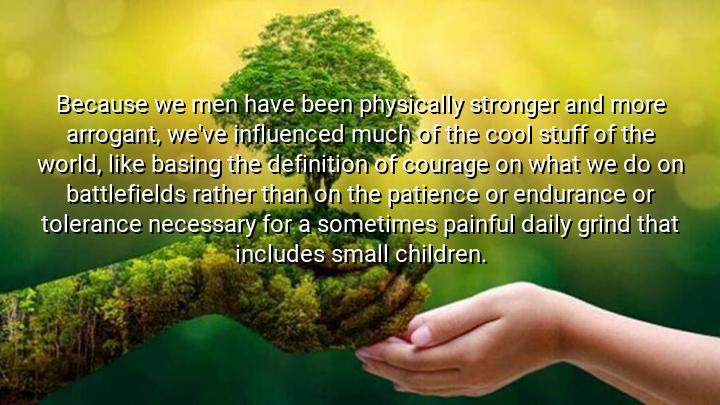




The quote by Clyde Edgerton, "Because we men have been physically stronger and more arrogant, we've influenced much of the cool stuff of the world, like basing the definition of courage on what we do on battlefields rather than on the patience, endurance, or tolerance necessary for a sometimes painful daily grind that includes small children," critiques traditional concepts of courage and masculinity. Edgerton points out that society has often associated true courage with physical feats, particularly in violent or extreme contexts like war. However, he contrasts this with the quieter, often overlooked forms of courage required in everyday life, such as the patience, endurance, and tolerance needed to navigate the challenges of parenting and personal relationships.
The origin of this quote comes from Clyde Edgerton, an American novelist known for his thoughtful and often humorous explorations of southern life and human relationships. Edgerton’s work often touches on themes of family, identity, and the complexities of masculinity. In this quote, he challenges traditional gender norms and redefines courage as something not just tied to physical strength or battle, but also to the mental and emotional strength required to handle the responsibilities of daily life.
Edgerton’s statement encourages a more inclusive understanding of courage, one that goes beyond the glorification of war or physical conflict. Instead, he highlights the sacrifice and emotional resilience required in the everyday struggles of life, particularly for those dealing with parenting and the demands of family life. Patience and endurance in the face of daily challenges, like caring for children or managing difficult relationships, can require just as much, if not more, courage than the actions taken on a battlefield.
Ultimately, this quote challenges traditional ideas about masculinity and courage, suggesting that true bravery lies not only in physical feats but also in the mental and emotional resilience required to face life's everyday challenges. Edgerton calls for a broader, more empathetic definition of courage that honors both the dramatic and the quieter, everyday acts of strength that shape our lives.

AAdministratorAdministrator
Welcome, honored guests. Please leave a comment, we will respond soon