

Be happy with what you have and are, be generous with both, and you won't have to hunt for happiness.
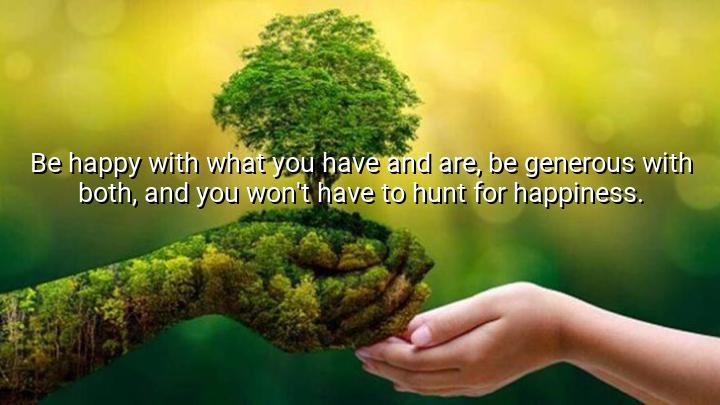




In this quote, William E. Gladstone emphasizes the importance of contentment and generosity in the pursuit of happiness. He suggests that true happiness is not found by constantly seeking more or comparing ourselves to others, but by being happy with what you have and appreciating who you are. The focus here is on internal gratitude and understanding that fulfillment doesn’t come from external possessions or achievements, but from a sense of peace with one’s present circumstances.
Gladstone also stresses the importance of being generous, not just with material things, but with one’s time, attention, and kindness. Generosity, in this context, is about creating a positive impact on others through the sharing of what you have, whether it’s resources or love. By being generous, you not only improve the lives of others but also create a sense of abundance in your own life, leading to greater satisfaction and fulfillment.
The quote suggests that instead of chasing after happiness, one should cultivate it by being content with who we are and what we have in the present moment. This aligns with the concept of self-acceptance and the realization that seeking happiness outside of ourselves can often lead to frustration, while contentment and generosity foster a deeper, lasting sense of joy.
Ultimately, Gladstone’s words encourage a shift in focus from the external to the internal. Happiness, he suggests, is not something to be actively pursued or hunted for, but something that arises naturally when we practice gratitude, contentment, and generosity. By adopting this mindset, we can find lasting joy without the need for constant striving or accumulation.

AAdministratorAdministrator
Welcome, honored guests. Please leave a comment, we will respond soon