

At its best, schooling can be about how to make a life, which is quite different from how to make a living.
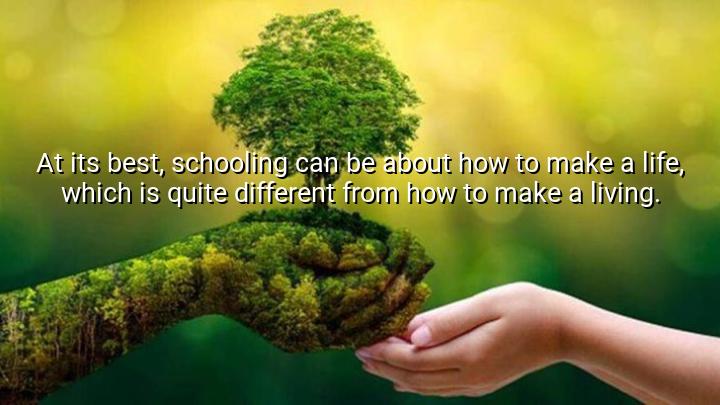




The quote by Neil Postman, "At its best, schooling can be about how to make a life, which is quite different from how to make a living," underscores the deeper purpose of education. Postman is suggesting that the ultimate goal of schooling should not be solely about preparing students for jobs or financial success (make a living), but about shaping individuals who can lead meaningful and fulfilling lives (make a life). This statement encourages educators and learners to think beyond the practical and material aspects of learning.
By differentiating between make a life and make a living, Postman draws attention to the limitations of viewing education purely as vocational training. While preparing for a career is important, schooling at its highest form involves teaching values, critical thinking, creativity, and compassion. These qualities enable students to navigate life thoughtfully, build relationships, and contribute positively to society.
The origin of this quote stems from Neil Postman’s broader critique of modern education systems. As a cultural critic, author, and professor, Postman often highlighted how schools had become overly focused on standardized tests, career preparation, and measurable outcomes. He believed that true schooling should inspire curiosity, teach students how to think critically, and help them explore what it means to live a good and purposeful life.
Ultimately, Postman’s words remind us that schooling, when at its best, nurtures the whole person. It does not just equip students with the skills to earn a paycheck but also instills the wisdom and perspective needed to find happiness, make ethical choices, and contribute meaningfully to the world.

AAdministratorAdministrator
Welcome, honored guests. Please leave a comment, we will respond soon