

As the body dieth when the soul departeth, so the soul of man dieth, when it hath not the knowledge of God.
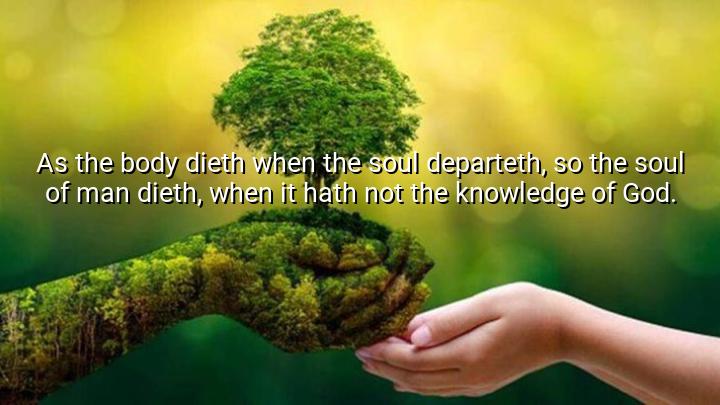




The quote by John Jewel draws a parallel between the body and the soul to emphasize the necessity of spiritual knowledge. He argues that just as the body cannot live without the soul, the soul itself cannot truly live without the knowledge of God. This reflects a deeply theological perspective that equates spiritual ignorance with spiritual death, highlighting the importance of faith and divine understanding in sustaining human life in its fullest sense.
By framing the knowledge of God as essential for the soul, Jewel underscores the belief that intellectual or worldly knowledge alone is insufficient for true life and salvation. The absence of a connection to God leaves the soul empty, lifeless, and cut off from its ultimate source of purpose and truth. This mirrors broader Christian doctrine, which stresses that spiritual vitality depends on an intimate relationship with the divine.
The imagery also reflects Jewel’s commitment to Reformation ideals. During a time when access to religious knowledge and Scripture was being debated, his words serve as a reminder that the vitality of faith depends on engaging with God’s truth. For him, the soul’s survival rests not merely on tradition or ritual but on active understanding and knowledge of God’s presence and will.
The origin of this quote comes from John Jewel, the 16th-century Bishop of Salisbury and a leading figure of the English Reformation. Known for his defense of Protestant teachings against Catholic critics, Jewel stressed the centrality of Scripture, faith, and knowledge of God for the life of the believer. His statement reflects his theological stance that without divine truth, the soul loses its vitality just as the body does without the soul.

AAdministratorAdministrator
Welcome, honored guests. Please leave a comment, we will respond soon