

As people flock to urban centers where ground space is limited, cities with green walls and roofs and skyscraper farms offer improved health and well-being, renewable resources, reliable food supply, and relief to the environment.
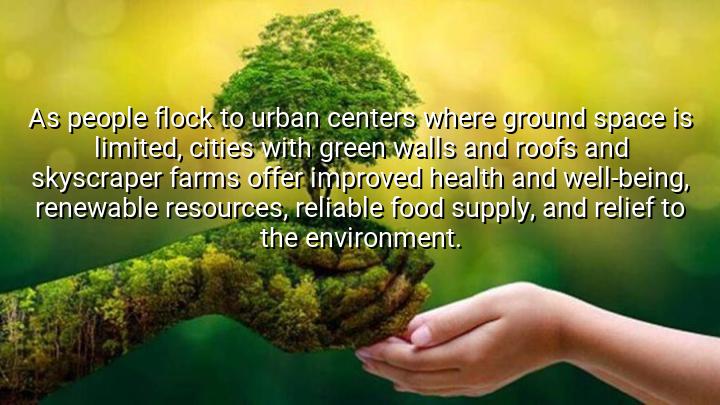




The quote “As people flock to urban centers where ground space is limited, cities with green walls and roofs and skyscraper farms offer improved health and well-being, renewable resources, reliable food supply, and relief to the environment” by Diane Ackerman reflects a forward-thinking vision of urban sustainability. Ackerman, a celebrated poet, science writer, and naturalist, emphasizes how innovative design can help address the challenges of urbanization while fostering a more harmonious relationship between humans and nature.
With more people moving to urban centers, traditional agriculture and green space become less accessible. Ackerman advocates for green walls, green roofs, and skyscraper farms as creative architectural solutions that transform unused vertical space into living, productive ecosystems. These innovations not only beautify cities, but also improve air quality, reduce urban heat, and offer local food production, promoting both environmental resilience and public health.
Her quote also connects environmental design with human well-being. Incorporating greenery into cities enhances mental health, encourages biodiversity, and makes sustainable practices a part of everyday life. By integrating renewable resources and ensuring a reliable food supply in densely populated areas, these strategies help combat both climate change and food insecurity.
In essence, Ackerman’s quote is a call to reimagine the way we build and live in cities. It reflects her broader commitment to merging science, art, and ecological consciousness, urging society to create urban environments that nurture both the planet and the people who inhabit it.

AAdministratorAdministrator
Welcome, honored guests. Please leave a comment, we will respond soon