

As I watched bookstores close, I began to wonder how that felt for the owners. Owning a bookstore was their dream and now they're struggling and seeing those dreams fall apart.
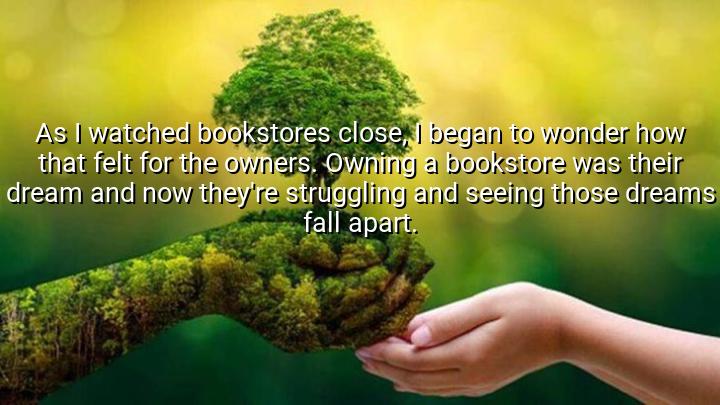




Karen Kingsbury’s quote reflects on the emotional impact of the decline of bookstores, particularly focusing on the owners who once saw opening a bookstore as the realization of their dream. She empathizes with how difficult it must be for these owners to watch their dreams unravel as their businesses face closures and struggles, which represents a profound disappointment and sense of loss. By observing this trend, Kingsbury raises questions about the fragility of small businesses and the challenges of maintaining a long-held vision in a rapidly changing marketplace.
The reference to bookstores closing highlights a broader cultural and economic shift, where traditional businesses, particularly those tied to print media, are increasingly being replaced by digital alternatives like e-books and online retailers. Kingsbury’s reflection on the struggle of bookstore owners suggests that owning such a business was not only a financial venture but also an emotional investment—something deeply tied to personal aspirations. The collapse of these businesses is more than just an economic downturn; it’s the shattering of an individual’s lifelong dream.
Kingsbury’s use of the phrase "seeing those **dreams fall apart" emphasizes the emotional toll of losing something deeply meaningful. For these bookstore owners, the struggles are not just about numbers on a balance sheet; they’re about the loss of a vision, a dream that once seemed possible. The emotional weight of watching their passion fade mirrors the difficult experience of anyone witnessing the collapse of a personal goal or aspiration.
Ultimately, the quote speaks to the broader human experience of loss, especially when dreams and passions don’t unfold as expected. It highlights the emotional side of entrepreneurship and the challenges of turning a personal dream into a sustainable reality. Kingsbury’s reflection invites us to consider the fragility of our dreams in a world that is constantly evolving, and the pain of seeing something we’ve worked for fade away.

AAdministratorAdministrator
Welcome, honored guests. Please leave a comment, we will respond soon