

As citizens, we have to co-create good governance, we cannot outsource it and hope to be passively happy consumers. Like everything worth its while, good governance must be earned.
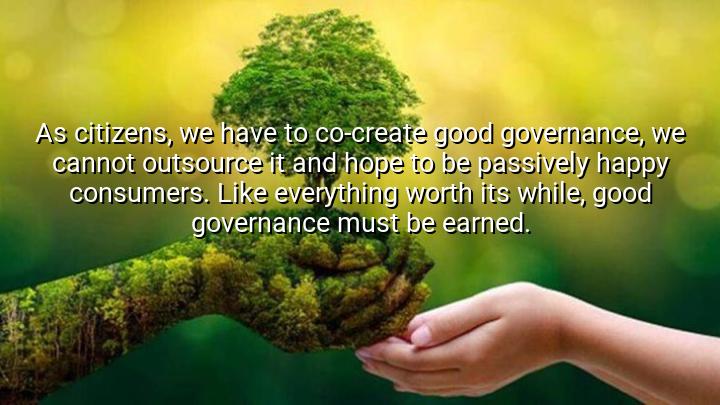




In this quote, Rohini Nilekani, an Indian author, social activist, and philanthropist, emphasizes the shared responsibility of citizens in shaping and maintaining good governance. She rejects the idea that governance can be left entirely to authorities or institutions while citizens remain passive, simply hoping to be happy consumers. Nilekani suggests that effective governance requires active participation, where individuals play a crucial role in co-creating and improving the systems that govern them.
The quote highlights the importance of engagement and responsibility in democratic societies. Nilekani is asserting that good governance isn’t something that can be "outsourced" or taken for granted. Instead, it must be earned through collective efforts, meaning citizens need to take an active role in shaping policies, holding leaders accountable, and being informed participants in the political and social processes.
By stating that "like everything worth its while, good governance must be earned," Nilekani is stressing that the quality of governance is directly linked to the involvement of the people it affects. Governance, she argues, is not a commodity that can be passively consumed; it is a dynamic process that requires collaboration, effort, and sustained attention. Only when citizens engage with the systems around them can they ensure that governance truly reflects their needs and values.
Ultimately, Nilekani’s statement is a call to action, urging people to actively contribute to the health and effectiveness of their societies. It emphasizes that democracy and good governance are not automatic; they require effort, engagement, and the willingness to work towards positive change. Her message encourages individuals to see themselves not just as recipients of governance but as vital contributors to its success.

AAdministratorAdministrator
Welcome, honored guests. Please leave a comment, we will respond soon