

Architecture is measured against the past; you build in the future, and you try to imagine the future.
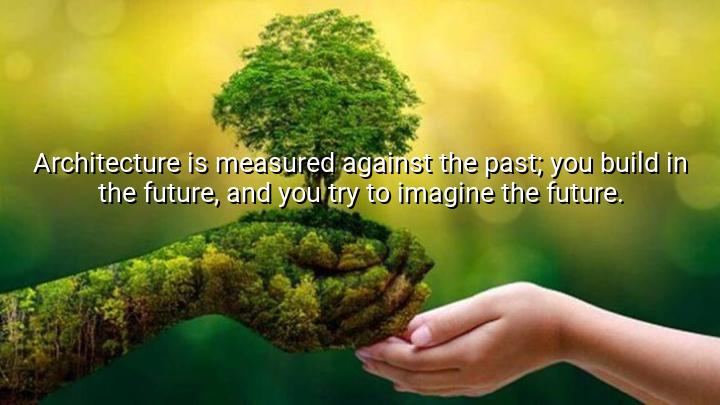




The quote "Architecture is measured against the past; you build in the future, and you try to imagine the future." by Richard Rogers encapsulates the temporal tension inherent in the discipline of architecture. Rogers, a celebrated British architect known for pioneering high-tech architecture and designing iconic buildings like the Pompidou Centre and Lloyd’s Building, speaks to how architecture constantly navigates between historical legacy and forward-looking innovation. The first part of his quote—"measured against the past"—acknowledges that any new structure is inevitably compared to what has come before it, both aesthetically and functionally.
At the same time, architects must "build in the future", meaning they design and construct for emerging needs, technological possibilities, and changing lifestyles. Rogers emphasizes the responsibility architects have to anticipate what lies ahead, ensuring that their work remains relevant, adaptive, and visionary. This involves not just responding to present conditions, but actively shaping the built environment for future generations through sustainable design, flexible spaces, and thoughtful urban integration.
The phrase "you try to imagine the future" highlights the creative and speculative dimension of architecture. Unlike history-bound disciplines, architecture must project into the unknown, often blending idealism with pragmatism. For Rogers, imagining the future means addressing not only how people will live and work, but also how architecture can enhance human experience and social equity in the years to come.
This quote originates from Rogers’s many public lectures and writings, where he advocated for responsible, inclusive, and visionary design. As a figure deeply involved in both architectural practice and urban policy, Rogers understood that architecture stands at the crossroads of tradition and transformation. His quote serves as a powerful reminder that to build meaningfully, one must respect the lessons of the past, act with intention in the present, and design with an eye toward the future.

AAdministratorAdministrator
Welcome, honored guests. Please leave a comment, we will respond soon