

And in that time, I lost my dad and had kids of my own. It was like, OK, I get it now. I know what fatherhood is all about. And you look at your parents differently.
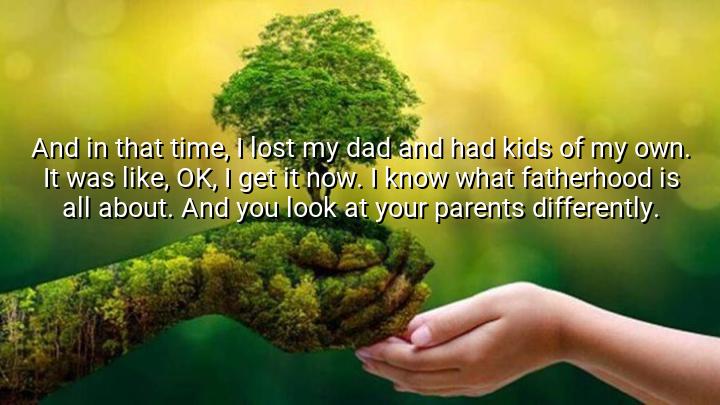




In this quote, Paul Reiser reflects on his evolution in understanding fatherhood after experiencing it himself. He mentions how, during a certain period of his life, he both lost his dad and became a father to his own children. This life-changing shift in his personal circumstances led him to a deeper realization about what fatherhood truly entails. Reiser acknowledges that only after having children did he fully comprehend the complexities and responsibilities of being a parent.
The phrase "OK, I get it now" conveys a moment of clarity or enlightenment. Reiser suggests that, before becoming a father, he couldn’t fully understand the sacrifices, challenges, and joys that his own parents experienced in raising him. His journey into fatherhood gave him a new perspective on parenting and allowed him to appreciate the sacrifices his father made.
Reiser also touches on the emotional growth that comes with becoming a parent. His statement that "you look at your parents differently" indicates that his newfound understanding of fatherhood made him reflect on his relationship with his own parents. As he became a parent himself, he began to view his father’s actions and decisions in a new light, with more empathy and appreciation for what his father must have gone through.
Originating from Reiser's own experiences as a father and his reflection on the loss of his dad, this quote encapsulates the transformative power of parenthood. It illustrates how the journey of raising children can fundamentally shift one’s perspective on life and family, leading to a deeper understanding of the roles and sacrifices that parents make.

AAdministratorAdministrator
Welcome, honored guests. Please leave a comment, we will respond soon