

An unschooled man who knows how to meditate upon the Lord has learned far more than the man with the highest education who does not know how to meditate.
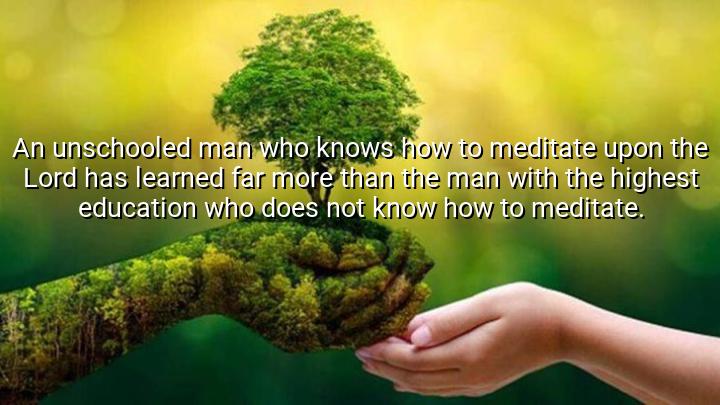




The quote by Charles Stanley emphasizes the distinction between formal education and spiritual or experiential knowledge. By stating, “An unschooled man who knows how to meditate upon the Lord has learned far more than the man with the highest education who does not know how to meditate,” Stanley highlights that spiritual insight and personal reflection can surpass academic learning in value. The quote underscores that true understanding often comes from inner growth and contemplation rather than degrees or titles.
Stanley underscores the importance of practical application of faith and meditation. The phrase, “knows how to meditate upon the Lord,” suggests that wisdom is demonstrated through active spiritual practice, devotion, and reflection. This type of learning shapes character, perspective, and moral understanding, which formal education alone may not provide.
Charles Stanley, a 20th- and 21st-century American pastor, theologian, and author, has often focused on teachings related to faith, spiritual discipline, and personal growth. This quote reflects his philosophy that spiritual awareness and connection with God are foundational forms of learning, emphasizing that true knowledge involves heart and mind, not just intellect.
Ultimately, the quote serves as a reminder that education is multifaceted. Stanley encourages individuals to value meditative and spiritual practices as a form of profound learning, recognizing that inner wisdom, faith, and reflection often yield insights more meaningful than formal schooling alone.

AAdministratorAdministrator
Welcome, honored guests. Please leave a comment, we will respond soon