

All the things one has forgotten scream for help in dreams.
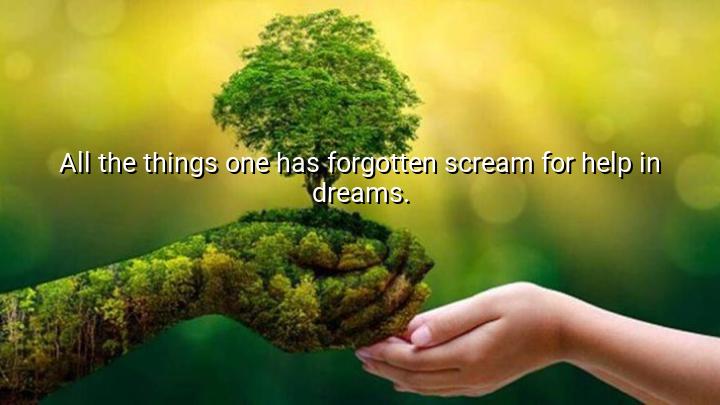




The quote "All the things one has forgotten scream for help in dreams" by Elias Canetti suggests that dreams serve as a powerful gateway to the unconscious mind, bringing to the surface emotions, thoughts, and memories that have been repressed or forgotten. Canetti, a Nobel Prize-winning author and philosopher, explores the idea that our dreams act as a channel through which unresolved or buried aspects of our psyche demand attention. These forgotten memories or suppressed feelings, which we may have consciously pushed away, find a way to re-emerge in the dream state, urging us to confront them.
This quote speaks to the concept of the unconscious mind, where all the experiences, traumas, and emotions we have tried to forget remain stored, awaiting the opportunity to resurface. Dreams, in Canetti’s view, are not just random images or fantasies but meaningful expressions of our deeper psychological needs. The "screaming" in dreams symbolizes the urgency and intensity with which these forgotten aspects of ourselves seek acknowledgment, suggesting that ignoring them can lead to internal conflict and emotional strain.
The origin of this quote can be understood through Canetti’s interest in human nature, memory, and the complexities of the mind. His works often delved into the ways people repress painful or uncomfortable experiences, and how these repressed elements can manifest in unexpected ways. Canetti’s perspective reflects his broader exploration of how individuals interact with their inner worlds, especially those aspects that are hidden or forgotten in waking life.
Ultimately, Canetti’s quote serves as a reminder of the power and significance of our dreams. It suggests that our dreams are not just random occurrences, but key to understanding the unconscious forces that shape our thoughts, emotions, and actions. By paying attention to the messages in our dreams, we can uncover the forgotten parts of ourselves that need healing or resolution, ultimately leading to a deeper understanding of our emotional landscape.

AAdministratorAdministrator
Welcome, honored guests. Please leave a comment, we will respond soon