

All the food we eat, whether Brussels sprouts or pork bellies, has been modified by mankind. Genetic engineering is only one particularly powerful way to do what we have been doing for eleven thousand years.
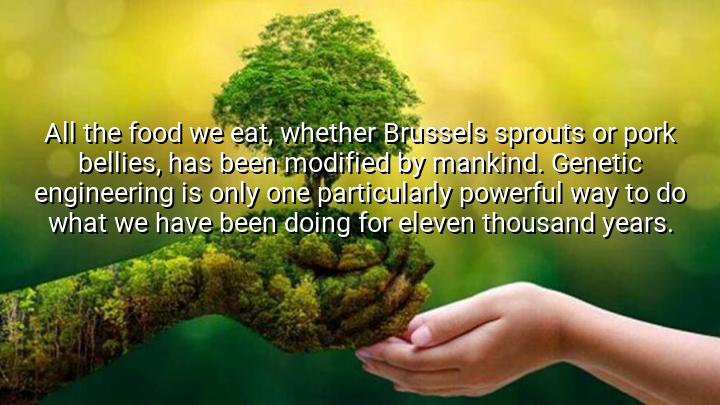




The quote "All the food we eat, whether Brussels sprouts or pork bellies, has been modified by mankind. Genetic engineering is only one particularly powerful way to do what we have been doing for eleven thousand years." by Michael Specter addresses the often misunderstood nature of genetic modification in agriculture. Specter argues that human intervention in food is not a modern phenomenon—it has been happening for millennia through methods like selective breeding, hybridization, and domestication. The introduction of genetic engineering, he suggests, is simply a more precise and advanced tool in the same ongoing process.
Michael Specter, a journalist known for his work on science, technology, and public health, has written extensively about biotechnology and food security. This quote comes from his discussions and writings defending the use of GMOs (genetically modified organisms). He seeks to correct the misconception that "natural" food is untouched by human influence, explaining that even the most common vegetables and meats have been shaped by thousands of years of human decisions and interventions.
By referencing both Brussels sprouts and pork bellies, Specter emphasizes that plant and animal products alike have undergone significant genetic changes, not through labs initially, but through traditional farming practices. These modifications were aimed at improving traits like taste, yield, resistance to disease, and adaptability. Genetic engineering, in this context, is not an unnatural break from tradition, but a continuation of it—just executed with modern scientific tools.
Ultimately, Specter’s quote encourages a more informed and historically grounded view of food science. He invites the public to see genetic engineering not as a threat, but as an evolution of the same practices that have allowed human civilization to feed growing populations and innovate in agriculture for over 11,000 years. It's a call for rational understanding over fear, rooted in the reality of how our food has always been shaped.

AAdministratorAdministrator
Welcome, honored guests. Please leave a comment, we will respond soon