

After you have exhausted what there is in business, politics, conviviality, and so on - have found that none of these finally satisfy, or permanently wear - what remains? Nature remains.
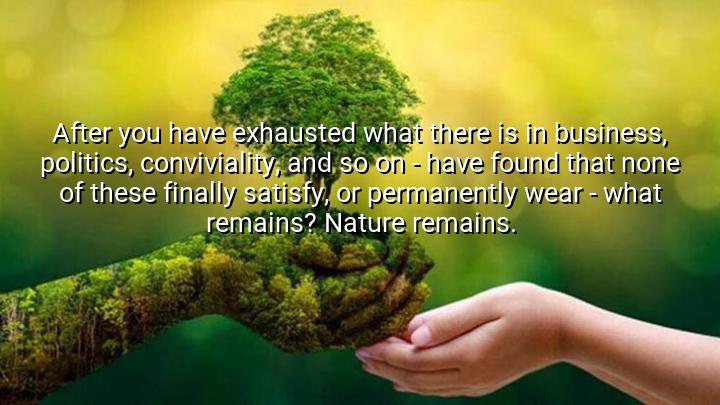




The quote "After you have exhausted what there is in business, politics, conviviality, and so on... what remains? Nature remains." by Walt Whitman speaks to the enduring and grounding power of nature amid the transience of human affairs. Whitman suggests that when the pursuits of business, politics, and social life lose their appeal or fail to offer lasting fulfillment, one can always turn to the natural world for meaning, peace, and renewal.
At its core, this quote reflects Whitman's transcendentalist beliefs, rooted in the idea that nature is a source of spiritual truth and personal restoration. Unlike the fleeting satisfaction offered by societal structures like commerce, government, and social gatherings, the natural world offers a constant, unchanging refuge. Nature doesn't demand performance or ambition—it simply exists, offering solace to those who seek it.
Whitman's perspective is shaped by his 19th-century American context, a time of rapid industrialization, political upheaval, and growing materialism. In this environment, he championed a return to simplicity, authenticity, and a deeper connection with the earth. His poetry often elevates nature as a spiritual companion, a silent teacher, and a balm for the weary soul.
Ultimately, the quote is a reminder that no matter how engaging or exhausting modern life becomes, nature is the enduring backdrop to human experience. It remains when everything else fades—quietly offering beauty, wisdom, and peace to those willing to listen.

AAdministratorAdministrator
Welcome, honored guests. Please leave a comment, we will respond soon