

After the knowledge of, and obedience to, the will of God, the next aim must be to know something of His attributes of wisdom, power, and goodness as evidenced by His handiwork.
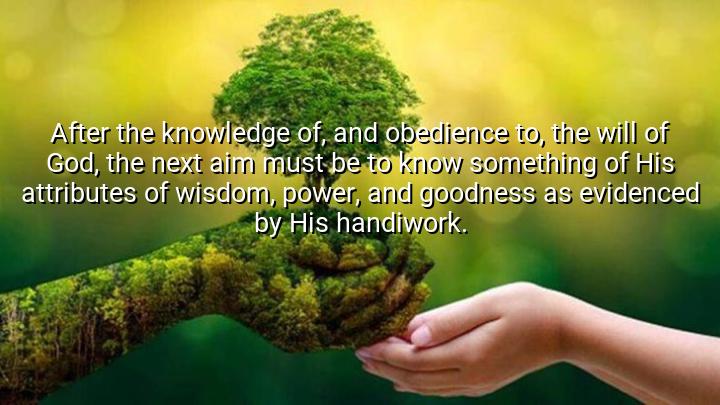




This quote by James Prescott Joule reflects on the relationship between faith, knowledge, and observation of the natural world. By stating, “After the knowledge of, and obedience to, the will of God,” Joule emphasizes that a proper understanding of divine intention begins with both awareness and adherence to God’s will. The quote situates spiritual knowledge as a primary objective in human life, highlighting the importance of faith and moral alignment.
Joule then shifts focus to the study of God’s attributes through creation. “The next aim must be to know something of His attributes of wisdom, power, and goodness as evidenced by His handiwork” suggests that observing the natural world provides insight into divine qualities. By examining nature, physical laws, and the complexity of the universe, one can gain a deeper appreciation of God’s wisdom, strength, and benevolence.
The quote originates from James Prescott Joule, a renowned English physicist and mathematician, best known for his work on the mechanical equivalent of heat and the conservation of energy. Joule’s perspective blends scientific inquiry with spiritual reflection, showing that he saw science as a means to understand and appreciate divine creation rather than in conflict with religious belief.
Ultimately, the quote emphasizes themes of faith, observation, and reverence for creation. It suggests that knowledge of God is complemented by the study of the natural world, and that understanding His wisdom, power, and goodness can be achieved by recognizing the evidence of divine handiwork in science and the universe.

AAdministratorAdministrator
Welcome, honored guests. Please leave a comment, we will respond soon