

Aeneas carried his aged father on his back from the ruins of Troy and so do we all, whether we like it or not, perhaps even if we have never known them.
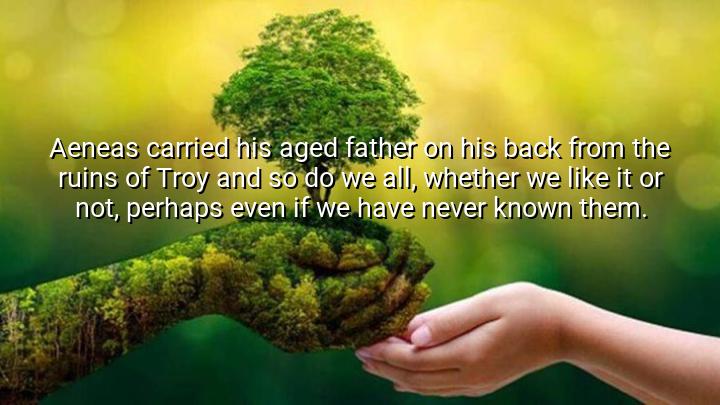




In this quote, Angela Carter uses the story of Aeneas, the hero of Virgil's Aeneid, to symbolize the burdens and responsibilities we carry from our past, particularly those linked to family. In the epic, Aeneas famously carries his aged father, Anchises, on his back as he flees the burning city of Troy. Carter suggests that, like Aeneas, all of us carry the weight of our family history, whether we are fully aware of it or not. These burdens can be emotional, generational, or tied to the legacies of our parents or ancestors.
Carter's statement reflects the idea that we are all shaped by the influences of our parents and upbringing, whether we have had direct relationships with them or not. Even if we never knew our parents or family members well, their actions, choices, or the history they created still affect us. This inheritance of familial traits, expectations, or unresolved issues is something we carry with us throughout life, sometimes without even realizing its influence.
The origin of this quote comes from Angela Carter, an English novelist and feminist known for her work that explored themes of identity, gender, and family dynamics. Carter often used mythological and literary references in her writing, and here she draws on the myth of Aeneas to illustrate the universal experience of bearing the weight of familial responsibility and legacy. Her works frequently dealt with the complexities of personal history and how it shapes individual lives.
Ultimately, Carter’s quote reminds us that, like Aeneas, we all carry the baggage of our past—whether it’s directly from our families or the broader cultural and historical influences that shape us. The metaphor of carrying a parent on our back underscores the idea that we are all shaped by what came before us, often in ways that are complex and challenging. This burden is not always easy, but it is an inescapable part of the human experience.

AAdministratorAdministrator
Welcome, honored guests. Please leave a comment, we will respond soon