

Action may not bring happiness but there is no happiness without action.
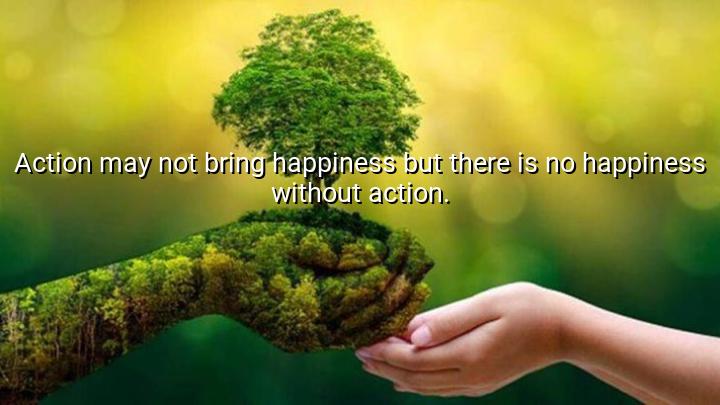




The quote by William James, "Action may not bring happiness but there is no happiness without action," highlights the relationship between action and the pursuit of happiness. James, a pioneering psychologist and philosopher, suggests that while action alone might not guarantee happiness, it is an essential component of achieving it. This reflects his broader philosophy, which emphasizes the importance of actively engaging with life rather than passively waiting for happiness to arrive.
James acknowledges that happiness cannot be reduced to a simple cause-and-effect relationship with action. Not every action or effort will lead to fulfillment, and it is possible to take many actions without achieving true happiness. However, his point is that happiness requires some form of action—whether it is pursuing goals, cultivating relationships, or finding purpose. Sitting idle or waiting for circumstances to change will not lead to happiness; one must take initiative and actively shape their life.
The quote also underscores the importance of agency in the process of achieving happiness. By taking action, individuals assert control over their lives and direct their efforts toward things that bring them joy or fulfillment. Action creates momentum, and through consistent effort and engagement, people increase the likelihood of experiencing happiness, even if it is not immediate or guaranteed.
Ultimately, James's quote serves as a reminder that happiness is not a passive state that arrives without effort. While action alone may not always bring immediate satisfaction, it is a necessary step toward building a life that fosters long-term happiness. By engaging with the world through action, individuals open themselves to new opportunities for joy and fulfillment.

AAdministratorAdministrator
Welcome, honored guests. Please leave a comment, we will respond soon