

A table, a chair, a bowl of fruit and a violin; what else does a man need to be happy?
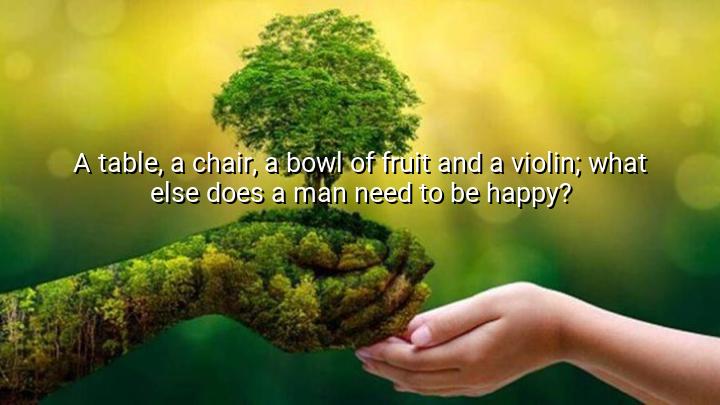




In this quote, Albert Einstein reflects on the simplicity of happiness and suggests that true contentment does not require material wealth or complex luxuries. Instead, he implies that the essentials for a fulfilling life are simple: a table, a chair, a bowl of fruit, and a violin. These basic items symbolize the fundamental pleasures of life: sustenance, comfort, and the ability to engage in creative expression.
Einstein’s mention of the violin is particularly significant, as it points to the idea that art and creativity play a central role in happiness. For Einstein, happiness is closely linked to the freedom to create, whether through music, science, or other forms of personal expression. This quote suggests that material possessions, while they may provide temporary satisfaction, are not as essential as the simple joys of creativity, companionship, and the enjoyment of life’s simpler pleasures.
The simplicity of the objects Einstein mentions also reflects his philosophy of living. He was known for valuing intellectual pursuits and simplicity in his personal life, often rejecting the excesses of wealth and fame. The quote speaks to a life that focuses on what is truly meaningful, with the recognition that contentment often arises from non-materialistic sources such as relationships, art, and personal fulfillment.
Ultimately, this quote highlights Einstein's belief that happiness is not dependent on external circumstances or material wealth, but on how we find meaning in the small, everyday experiences that bring us joy. It is a reminder to focus on the simple yet deeply enriching aspects of life, where true contentment can often be found.

AAdministratorAdministrator
Welcome, honored guests. Please leave a comment, we will respond soon