

A person's current personality of love, hatred, jealousy, rage or a murderous intent and so on is formed upon genetic elements, education, the environment and a family a person grows in.
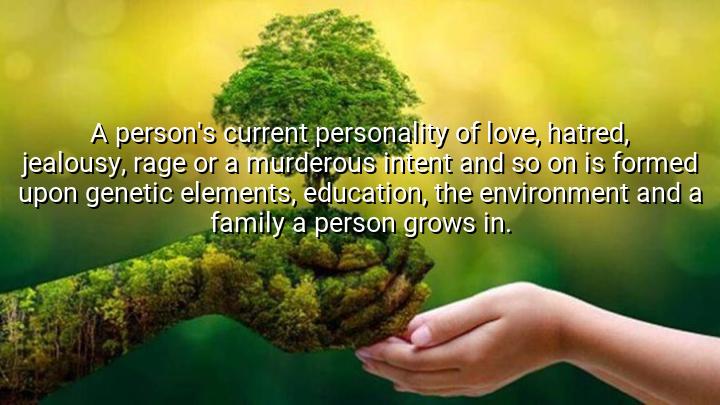




The quote “A person's current personality of love, hatred, jealousy, rage or a murderous intent and so on is formed upon genetic elements, education, the environment and a family a person grows in.” by Kim Ki-duk explores the complex origins of human behavior. Kim, a renowned South Korean filmmaker known for his contemplative works on human nature, emphasizes that personality and emotional tendencies are not shaped by a single factor but emerge from a combination of influences. He highlights that traits such as love, hatred, jealousy, or rage are deeply rooted in both biological inheritance and the social context in which a person develops.
By referencing genetic elements, Kim acknowledges the role of biology in predisposing individuals toward certain behaviors or emotional patterns. At the same time, he points to education, environment, and family as critical shaping forces, suggesting that nurture—how a person is raised, the experiences they encounter, and the values instilled by their surroundings—interacts with nature to form character. This reflects a holistic understanding of human development, where both innate and external factors are inseparable.
The quote also resonates with Kim Ki-duk’s broader artistic perspective, which often examines the dark and complex aspects of human nature. By including extreme traits like murderous intent, he underscores that even violent tendencies can have roots in a combination of genetic predisposition and environmental influence, challenging the notion of morality as entirely innate or entirely chosen.
Ultimately, this quote serves as a reminder of the intricate interplay between nature and nurture in shaping a person’s emotions, behavior, and personality. It encourages reflection on how our surroundings, upbringing, and inherited traits influence not just our positive qualities, like love, but also the more destructive aspects of human character, such as jealousy or rage.

AAdministratorAdministrator
Welcome, honored guests. Please leave a comment, we will respond soon