

A kid in an abusive home has far fewer rights than any POW. There is no Geneva Convention for kids.
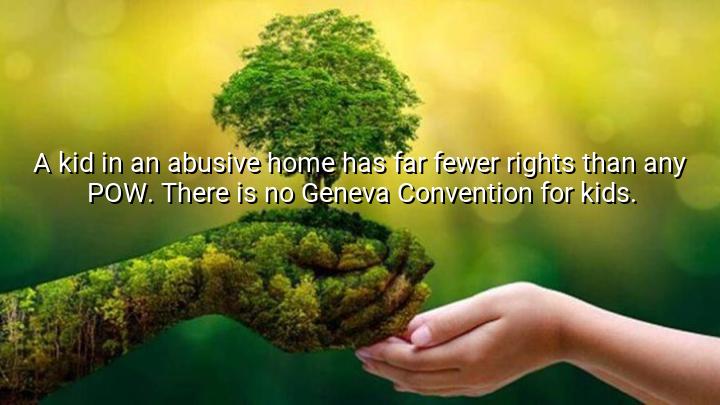




In this quote, Andrew Vachss, a well-known advocate for abused children, compares the rights of children growing up in abusive homes to those of prisoners of war (POWs). He argues that a child in an abusive situation has far fewer protections or rights, implying that their suffering is often ignored or neglected. Vachss highlights the vulnerability of children in these environments, pointing out the lack of a formal system or set of rules to safeguard them from harm, similar to the Geneva Convention that exists to protect the rights of prisoners of war.
Vachss' reference to the Geneva Convention is particularly striking. The Geneva Convention, which provides guidelines for the humane treatment of POWs, is a formal international agreement designed to prevent cruelty. By contrast, Vachss points out the glaring absence of any comparable protections for children who endure abuse, emphasizing how society often fails to treat the well-being of children with the same level of seriousness and consideration as that of prisoners in wartime.
The quote also underscores the powerlessness of children in abusive homes, who often lack the means to escape or seek help. Unlike POWs, who at least have international legal protections, children are typically left to suffer in silence, their plight often unnoticed or dismissed. Vachss uses this comparison to emphasize the injustice faced by abused children and the need for greater awareness and intervention in these cases.
Ultimately, Vachss’ quote is a powerful critique of the systems in place for protecting vulnerable children. It highlights the stark reality that, unlike prisoners of war, children in abusive homes are often without recourse or protection. His words serve as a call to action, urging society to recognize and address the lack of rights for children facing abuse, advocating for better protections and support systems.

AAdministratorAdministrator
Welcome, honored guests. Please leave a comment, we will respond soon