

A good decision is based on knowledge and not on numbers.
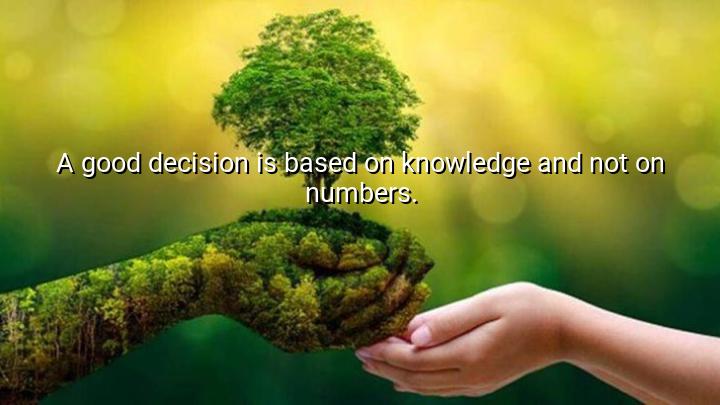




The quote “A good decision is based on knowledge and not on numbers” by Plato emphasizes the importance of wisdom and understanding in decision-making over mere reliance on statistics or majority opinion. Plato suggests that true knowledge, rooted in reason and insight, is what leads to sound choices, whereas numbers—whether they represent votes, figures, or data—can be misleading if not interpreted with wisdom. For him, the quality of judgment matters more than the quantity of support or numerical evidence.
The origin of this quote can be found in Plato’s philosophical works, where he often explored the nature of justice, truth, and governance. In The Republic and other dialogues, he warned against the dangers of democracy as rule by numbers alone, arguing instead for leadership guided by philosopher-kings—those who pursue knowledge and truth. His perspective reflected his belief that the stability and fairness of society depend on wise decisions, not just popular opinion or numerical advantage.
This quote also underscores the limitations of numbers in complex human matters. While data and figures can provide valuable insights, they cannot capture the full depth of human experience, ethics, or long-term consequences. A decision made solely on numbers risks being shallow or shortsighted, whereas one guided by knowledge considers context, morality, and deeper truths. Plato’s distinction reflects his broader philosophy that wisdom, not calculation, is the highest guide for human action.
Ultimately, Plato’s words remain deeply relevant in modern contexts—from politics to business—where leaders often face the temptation to follow polls, profits, or statistics without deeper reflection. His insight reminds us that knowledge—understanding causes, principles, and long-term impacts—is the true foundation of good decision-making, and that numbers only gain meaning when guided by wisdom.

AAdministratorAdministrator
Welcome, honored guests. Please leave a comment, we will respond soon