

A father is a man who expects his son to be as good a man as he meant to be.
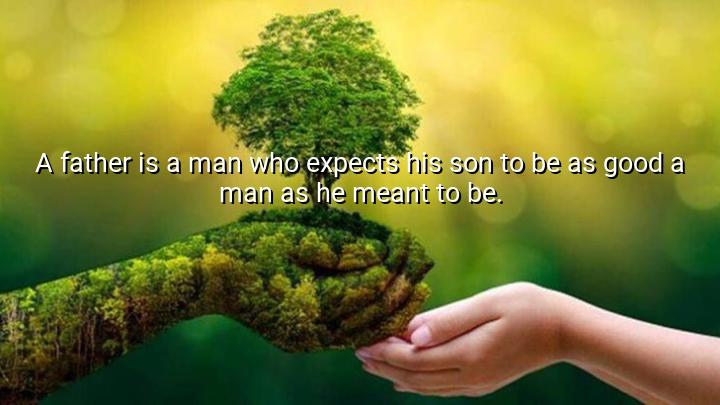




In this quote, Frank A. Clark reflects on the expectations a father has for his son. Clark suggests that a father often hopes his son will live up to the ideals and values that he himself aspired to, but may not have fully achieved. The idea is that a father’s love and guidance come with the hope that the son will surpass him, reaching the potential that the father may have fallen short of in his own life. This speaks to the legacy of parental influence and the desire for the next generation to achieve greatness.
Clark’s words imply that fatherhood is rooted in aspirations and the wish for one’s child to lead a better, more fulfilled life. Fathers often pass down not just practical knowledge and skills, but also their dreams for the future, hoping that their children will fulfill the potential they may have never realized for themselves. It suggests a sense of continuity in the family, where each generation carries forward the aspirations and unfulfilled hopes of the previous one.
The origin of this quote lies in Clark's understanding of parent-child dynamics, particularly in the context of fatherhood. As an American writer, Clark often explored social and familial themes, recognizing the emotional complexities in the relationships between fathers and their children. His observation here reflects the universal desire for parents to see their children thrive and succeed, perhaps more than they were able to themselves.
Ultimately, Clark’s words highlight the complex emotional landscape of fatherhood, where fathers aim to guide their children not just based on their own experiences, but with the hope that their children will achieve something greater. It emphasizes the selflessness and love that often drives a father's expectations for his son, creating a cycle of ambition and growth within the family.

AAdministratorAdministrator
Welcome, honored guests. Please leave a comment, we will respond soon