

A dream is a scripture, and many scriptures are nothing but dreams.
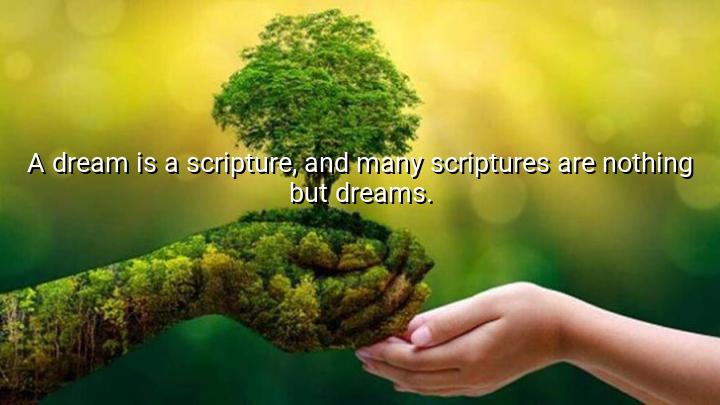




Umberto Eco's quote, "A dream is a scripture, and many scriptures are nothing but dreams," explores the connection between dreams and written texts. Eco suggests that both dreams and scriptures can be seen as a form of communication, conveying profound truths or insights. A dream, in this sense, is not merely a random occurrence but something that can hold deep, symbolic meaning, much like a sacred text.
The origin of this quote reflects Eco's broader intellectual interests in semiotics, philosophy, and the interpretation of cultural symbols. Eco, known for his work on semiotics and medieval studies, often explored how texts—whether religious scriptures or literary works—shape our understanding of reality. By likening dreams to scriptures, Eco challenges the traditional view of religious texts as the only authoritative source of knowledge, proposing instead that dreams too can serve as a source of meaning and insight.
The phrase also suggests that scriptures, which are often considered divinely inspired or authoritative, could be seen as products of the human mind, much like dreams. This raises questions about the nature of belief, faith, and the interpretation of what is considered sacred. In Eco’s view, both dreams and scriptures are shaped by the subconscious and collective human experience, making them equally potent sources of truth and wisdom.
In essence, the quote invites a reflection on how we interpret reality and the ways in which symbolic or imaginative experiences, like dreams, can hold just as much significance as traditional texts. It blurs the line between the real and the imagined, suggesting that both have the potential to shape our understanding of the world.

AAdministratorAdministrator
Welcome, honored guests. Please leave a comment, we will respond soon